Share this



Power bills are expected to rise again this year, and winter usage can make the pressure harder to manage. Before the colder months set in, here are five practical checks that may help members compare plans, reduce waste and avoid paying more than they need to.
Winter is when many households start to feel the real cost of power.
Heating, hot water, lighting, drying clothes and more time spent indoors can all add to the bill.
And this year, the pressure may be even greater.
Consumer NZ expects power prices to increase by about 5% in 2026, after households were already hit with a 12% increase to power bills last year. Consumer NZ says the increase is partly being driven by higher lines charges the cost of delivering electricity to your home, which make up just over one-third of the average power bill.
Paul Fuge, Powerswitch manager, explains why that matters:
“Power bills are hiking up because of an increase in lines charges’ costs – that’s the cost of delivering power to your house, and it’s the amount on your bill that stays the same regardless of how much power you use.”
Powerswitch has also told users that, after two years of price hikes, the cheapest electricity price for an average household has gone up by $481 per year.
That makes one point very clear: even if households cannot control every part of the power bill, it is still worth checking whether their current plan is competitive.
That does not mean every household can easily cut its power use. Warm, dry homes matter especially for families, older people, children, shift workers and anyone managing health needs.
But it does mean it is worth checking whether your current plan and habits still make sense before winter usage peaks.
Please note: This article provides general information only. It is designed to help members think about practical steps they may wish to consider when reviewing household power costs. It is not financial advice and does not take into account your personal circumstances.
1. Start by understanding your latest bill
Your latest power bill is the best place to start. It shows what you are paying for, how your household uses power, and the information you need to compare your current plan with other options.
EECA says a power bill can be a useful tool for understanding how your household uses energy, including where your costs are coming from and where changes might make a difference. That means your latest bill is the best place to start before using a comparison tool like Powerswitch or Billy.
When you look at your bill, check:
-
Your daily fixed charge - the amount you pay each day, regardless of how much power you use.
-
Your usage charge - the amount you pay for the electricity you actually use.
-
Your total usage - usually shown in kilowatt-hours, or kWh.
-
Whether your bill is based on an actual or estimated meter reading.
-
Any discounts, credits or fees - including whether a discount has ended.
-
Whether your usage has changed compared with earlier bills.
This helps you understand whether your bill is higher because you are using more power, because prices have changed, because fixed charges have increased, or because your plan no longer suits the way your household uses energy.
A simple way to do this is to compare your latest bill with one from the same time last year, if you have it.
Look at both the total amount and the number of units used. If your usage is similar but the cost is higher, price changes or fixed charges may be playing a bigger role.
If your usage has increased, it may be worth looking at heating, hot water, drying clothes or other habits that change in winter.
2. Check whether your power plan still suits your household
Many people stay on the same power plan for years. But your household may have changed.
You may now have more people at home. You may work different hours. You may use more power at night. You may have added a heat pump, dryer, dehumidifier, extra freezer or electric vehicle charger. Or your retailer may have changed its pricing.
The best plan for your household is not always the one with the lowest advertised rate. It depends on when and how you use power.
Look at your latest bill and check:
- your daily fixed charge
- your usage rate
- whether you are on a standard, low-user, time-of-use or other plan
- whether any discount has ended
- whether your household uses most power during peak or off-peak times
Powerswitch says the latest 1 April retailer price updates are now reflected in its comparison results, which makes this a timely moment to double-check your plan before winter usage increases.
Powerswitch is a free, independent price comparison service run by Consumer NZ, and says its users can save around $400 a year on average. It compares electricity and gas plans from participating New Zealand power companies and ranks comparisons by price, not promotion.
Billy, run by the Electricity Authority, is another free comparison tool that lets households upload a recent bill or answer questions about power use to compare plans.
The practical step is simple: use your latest bill, run a comparison, and check whether the result is meaningfully cheaper once you understand the plan, rates, terms and any conditions.
3. Look at when you use power, not just how much you use
Some plans charge different rates depending on the time of day.
If you are on a time-of-use plan, using appliances during peak times may cost more. If you can shift some usage to cheaper times, you may be able to reduce pressure on the bill without making your home colder.
That might mean:
- running the dishwasher later in the evening
- using the washing machine outside peak times
- charging devices or appliances overnight where safe
- using timers where appropriate
- avoiding multiple high-use appliances at the same time during peak periods
This will not work for every household. Families with young children, shift workers, renters, and people with health needs may have less flexibility. But even one or two small shifts can help if your plan rewards off-peak use.
A good way to check this is to look at whether your bill separates usage into peak, off-peak or night rates. If it does, your household may have an opportunity to shift some non-urgent power use. If it does not, a comparison tool can help you see whether a time-of-use plan is worth considering.
4. Make your heating and hot water work harder
Some power use is obvious. Heating and dryers are easy to spot. Other costs are less visible, especially hot water.
Start with the big winter power users:
- heating
- hot water
- clothes drying
- heated towel rails
- extra fridges or freezers
- appliances used during peak times
For heating, focus on the rooms you actually use. Ask:
- Which rooms need heating every day?
- Are there rooms being heated out of habit?
- Can doors be closed to keep heat where it is needed?
- Are curtains being closed before the temperature drops?
- Are draughts making heating less effective?
- Are heat pump filters clean?
Small changes can help your heating work harder. Closing curtains early, blocking draughts, using rugs on cold floors, and keeping heat in living areas can all help reduce waste.
For hot water, look at the repeat habits:
- Are showers getting longer?
- Are hot taps dripping?
- Is the heated towel rail on all day?
- Are cold washes an option for some laundry loads?
- Is the cylinder or hot water system working efficiently?
You do not have to change everything. Pick one or two habits that are realistic for your household. The aim is to reduce waste, not make your home cold, damp or uncomfortable.
5. Build a winter buffer before the bigger bills arrive
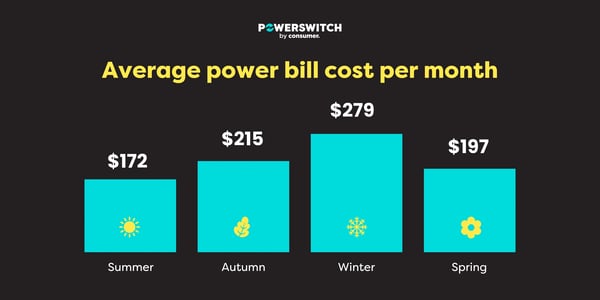
A power bill check is not only about reducing usage. It is also about planning for a seasonal increase.
If your household budget is already tight, a higher winter bill can cause stress when it arrives. One way to reduce the shock is to start smoothing the cost earlier.
That might mean:
- setting aside a small weekly amount for higher winter bills
- asking your power company about smoothing or equal payment options
- reviewing direct debit amounts before winter usage rises
- checking whether you are eligible for support
- making sure estimated bills are corrected with actual meter readings where needed
It can also help to look back at last winter’s bills. If your July or August bills were much higher than your autumn bills, use that as a warning sign.
Planning for the likely increase now may be easier than trying to absorb it all when the larger bill arrives.
If you are worried about paying a bill, contact your provider early. It is usually easier to discuss options before the account becomes overdue.
What members can do this week
A good winter power check does not need to take hours. Start with your latest bill and work through these five steps:
1. Check what you are paying for. Look at your fixed daily charge, usage rate, total kWh, discounts and whether the bill is actual or estimated.
2. Compare your usage. Compare your latest bill with a previous month, or the same month last year if you can. Is the bill higher because you used more power, or because the price has changed?
3. Compare your plan. Use an independent comparison tool such as Powerswitch or Billy to check whether another plan may better suit your household.
4. Pick one high-use habit to review. Choose heating, hot water, drying clothes, heated towel rails or peak-time appliance use.
5. Plan for the next bill. If winter bills are likely to be higher, consider whether you can set aside a small weekly amount, adjust your direct debit, or talk to your provider early if you are worried about payment.
The aim is not to make your home colder or less healthy. It is to make sure you understand what is driving your bill and whether there are practical steps that could reduce avoidable costs.
Final thoughts from Us
Power bills can be frustrating because they are partly about usage and partly about charges households cannot easily control.
That is why the best first step is not to blame yourself for using power in winter. Warmth, light, hot water and dry clothes matter. The more useful question is whether your plan, habits and budget are still set up for the way your household actually lives.
A quick check now could help reduce surprises when winter power use peaks.
Sources used in preparing this article
- Consumer NZ: Power prices predicted to surge
- Consumer NZ: How to find the best power plan
- Powerswitch: Compare and find cheap energy plans
- EECA: Check you’re on the right power plan
- Electricity Authority: Compare and switch to save
- Billy: Free power comparison tool

Leave a comment