Share this



Physical activity supports health at every age, but the way we move does not stay the same forever. What works for a child who wants to play, explore and build confidence is not always what suits a young adult balancing study and work, a parent juggling family life, or an older person wanting to stay steady, strong and independent.
That is why a life-stage approach to movement can be so useful. Instead of treating exercise as one-size-fits-all, it helps to think about what your body needs right now, what your day-to-day life allows, and what kind of activity feels realistic enough to keep doing.
The encouraging part is that movement does not have to be intense to be worthwhile. It does not have to involve a gym, a training plan or a dramatic transformation. In many cases, the most valuable routine is simply the one that fits into real life and helps you feel healthier, more capable and more energised over time.
Why Movement Matters
Regular movement supports heart health, muscle strength, mobility, balance, sleep, mood and overall wellbeing. It can also help reduce the risk of a range of long-term health conditions and make everyday life feel easier.
Across every life stage, a few principles stay the same. Move regularly. Build strength. Spend less time sitting still. Choose activities you enjoy enough to repeat.
What changes is the focus.
In childhood, movement helps build confidence and physical skills. In early adulthood, it often becomes about creating self-directed habits. During busy adult years, the challenge is making movement fit around everything else. In midlife and later life, strength, function, balance and independence often become a bigger priority.

A guide to movement across life stages
Up to 15 years
In childhood, movement is best built through play, variety and positive experiences. Running, jumping, climbing, balancing and exploring all help children develop confidence and the basic movement skills that support lifelong activity.
15 to 30 years
This is often the stage where movement becomes self-managed. School sport may drop away, routines become less structured, and physical activity has to fit around study, work, social life and changing priorities.
30 to 45 years
For many people, these are the busy years. Movement often competes with work, family, caregiving and the general pace of life. Flexible routines and realistic habits become especially important.
45 to 60 years
Midlife can be a valuable time to focus on strength, mobility, function and long-term health. This is often the stage when people start to think less about performance and more about staying capable and well.
60 to 75+ years
Later life is not a time to stop moving. In many ways, it is when movement matters most. Staying active can support balance, confidence, independence and the ability to keep doing everyday activities safely and comfortably.
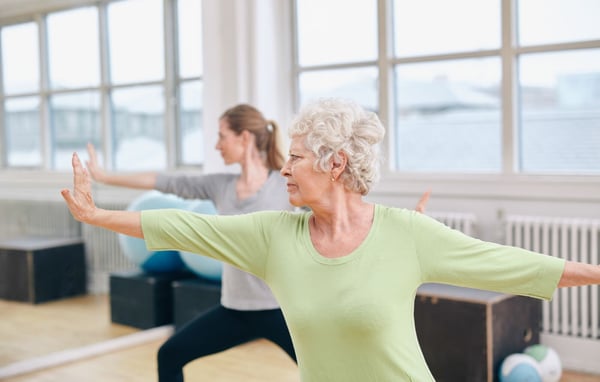
Four movement ideas that matter at any age
1. Build your aerobic base
Walking, cycling, swimming and other moderate activities support heart and lung health and help everyday tasks feel easier.
2. Keep your strength up
Strength supports posture, bone health, function and resilience throughout life. It becomes especially important with age.
3. Train movement, not just muscles
Mobility, coordination and balance all help the body move well in daily life. Practical movement matters just as much as structured exercise.
4. Sit less and move more often
Formal exercise matters, but so does what happens during the rest of the day. Breaking up long periods of sitting can make a meaningful difference.

Keep it realistic
The most effective movement routine is rarely the most extreme one. It is usually the one you can return to consistently.
That could mean active play with children, walking more often, two short strength sessions a week, a swim on the weekend, gentle balance work at home, or standing up and moving more through the day. It does not have to look perfect to count.
Movement does not need to be all-consuming to be meaningful. It simply needs to support the life you want to live now, while helping protect your health for the years ahead.

Leave a comment