Share this



Recent storms have reminded many households that the impact of severe weather does not end when the rain stops. Damage, disruption, clean-up and insurance questions can all add pressure at once.
We looked at the practical advice Tower is offering customers after the storm and are sharing the key themes here, because they are relevant to any household dealing with damage and uncertainty.
Please note: This article is intended as general information only and does not constitute insurance, financial or legal advice. Cover, exclusions and claims processes depend on your individual policy and circumstances. For advice about your own situation, check your policy documents and speak with your insurer, adviser or another relevant professional.
Storms, claims and cleanup: what to do first, what to document, and where to go for help
When severe weather hits, the stress is rarely just about the weather itself.
For many households, the days that follow can bring a mix of clean-up, damaged belongings, urgent decisions and uncertainty about what needs to happen next. There may be practical questions about safety, concerns about the cost of repairs or replacements, and worries about how to begin sorting things out.
In that kind of situation, clear early steps can make a difficult few days feel more manageable.
It is not about doing everything at once. It is about knowing what to prioritise, what to document, and where to go if you need support with a claim or with resolving an insurance issue.
That is why clear information matters.
The themes that stand out are straightforward, but important: put safety first, document the damage, and take practical steps that can make recovery and any claims process clearer later on.
-1.png)
At a glance - Things to consider after a storm:
- Be Careful. Water damage can be dangerous or even toxic. Avoid contact with affected surfaces and stay clear of items that may be unsafe due to contamination.
-
Follow Civil Defence advice. Stay updated with local council and Civil Defence bulletins and always follow their guidance.
- Avoid storm water. It can be dangerous or toxic. If you're unsure about the water's safety, treat it as contaminated. Don't try to drive or walk through flood water unless it's absolutely essential.
- Turn off the power. If water has entered your house, switch off at the mains until your home has been checked by an electrician.
- Car safety. If your vehicle has flooded, it is likely unsafe to drive due to hidden mechanical or electrical issues and contaminated water. If your vehicle has not been flooded, you can use it, but drive cautiously: watch for debris, drive slowly, and stay alert.
- Don’t try to secure your roof. If it has significant damage, contact Fire and Emergency to get help with this.
- Lift wet carpets. They will dry faster when off the floor and may not need to be replaced. Don’t attempt to lift any vinyl flooring.
- Check for unstable trees or walls. High winds can damage trees and property, check to make sure your place is safe.
Safety comes first
Before anything else, follow the advice of emergency services and Civil Defence.
The instinct to get outside, inspect the damage and start cleaning up can be strong. But the first priority has to be safety.
New Zealand’s National Emergency Management Agency says people should follow advice from local Civil Defence and emergency services, stay away from damaged areas, watch for hazards such as contaminated water, damaged roads, landslides and unstable ground, and keep up to date with the latest weather information.
Its flood guidance also says to:
-
Stay out of badly damaged buildings and, if possible, flood water. Do not drive flooded vehicles.
-
Turn off water, electricity and gas if advised to do so and don’t turn it back on until it has been checked and cleared.
That is an important reminder because the pressure to “sort everything out” can come very quickly.
In reality, if your home is not safe to stay in, your immediate priority is people, not paperwork.
Clear records can reduce stress later
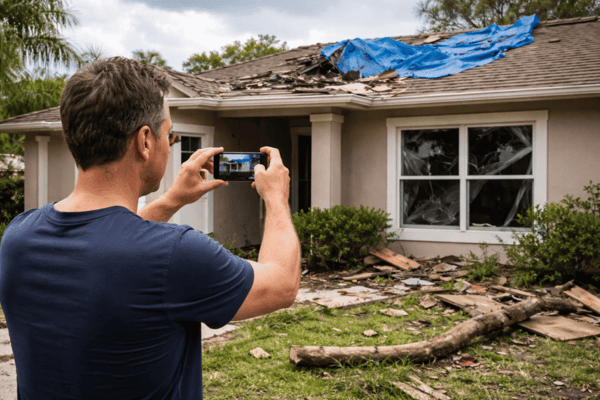
Once everyone is safe, one of the most useful things you can do is create a clear record of the damage before major clean-up begins.
That generally means taking photos before major clean-up begins, making a note of damaged items, and keeping any receipts or supporting information that may help later.
The practical value of this is simple: when damage is spread across several areas, or the full extent is not obvious straight away, a clear record can make later conversations and decisions much easier.
This may feel like one more job in an already stressful week. But it can reduce confusion later, especially if repair work, replacements or an insurance claim are involved.
Do what you reasonably can to prevent further damage
After a storm, there is often a tension between waiting for insurer direction and needing to act quickly.
A practical rule of thumb is this: if something needs urgent attention to stop the damage getting worse, deal with that first if it is safe to do so.
The National Emergency Management Agency’s January 2026 insurance recovery guidance says people do not need to wait to begin safe recovery and loss-prevention actions if they have the means to do so safely.
That can include emergency repairs to make a home dry, secure, weather-tight and sanitary, or temporary work to prevent further damage , such as engaging a qualified professional to fit a tarpaulin. make sure to keep receipts and a record of work done.
When Clean-up begins, records still matter
The next challenge is often working out how much clean-up can begin straight away. The guidance is also clear that records matter.
People are advised to mark and photograph the highest point of flooding, list anything that is removed, take photographs, and gather proof of purchase where possible to support a claim.
At the same time, some work should not be rushed: hard floor coverings, wall linings and structural elements should not be removed, and any materials that may contain hazardous substances should only be dealt with after speaking to the insurer and, where needed, using suitably qualified professionals.

Check what your policy says
It is worth taking time to check your policy documents or claims information.
The details matter. Excesses, limits, exclusions, temporary accommodation support and claim requirements can vary depending on the policy and the circumstances.
The National Emergency Management Agency’s January 2026 insurance recovery guidance notes that temporary accommodation support is often available under home and many contents policies when a home is uninhabitable, although this depends on the policy. It also points people to their insurer before major structural work is carried out.
The key message here is contact your insurer as soon as possible for any advice specific to your circumstances and what information they will need.
At a glance - tips for claiming
- Write a list. Note down everything that was damaged to make sure you don’t miss anything.
- Record any damage. Where safe, take photos or videos before starting any clean up or throwing any rubbish away.
- Find receipts. If you can find any proof of purchase, it really helps. Keep any you can find with your list.
- Check your policy. You may find you can make a claim for something you didn’t know about.
- Make things clear. Taking time to make your claim as clear and complete as you can will make things more efficient. Remember, pictures are very helpful.
Know where to go if you need help resolving a claim
For some households, the claim process is straightforward. For others, it can become stressful, slow or difficult to navigate.
Where things become difficult or unclear, there is also independent help available. MBIE says the New Zealand Claims Resolution Service is a free service for homeowners that provides independent advice, case management, and access to legal and technical services after a natural disaster damages a home.
That kind of support will not remove the disruption. But it can help people understand their options, ask better questions, and feel less alone in dealing with the process.
A useful reminder for Members
The recent storms have been a sharp reminder that financial resilience is not only about budgeting or saving for the future.
It is also about how households cope when something sudden and disruptive happens. In those moments, practical steps matter: making sure people are safe, documenting the damage, beginning safe clean-up where appropriate, keeping records, and knowing where to turn if questions or problems arise.
Those actions may seem small in the middle of a stressful week, but they can make a real difference. They can reduce confusion, help households stay organised, and make it easier to deal with repairs, claims and next decisions.

Leave a comment