Share this



Food prices may have paused for now, but the weekly shop is still a pressure point for many households. A cheaper default shop can help members build repeatable habits that reduce waste, compare value and make everyday meals stretch further
Food prices were unchanged from March to April 2026, according to Stats NZ, and were up 2.6% over the year to April. That pause is welcome, but it does not mean groceries suddenly feel cheap. Many households are still carrying the impact of earlier price rises, especially on staples, fresh produce, meat and lunchbox basics.
That is why this article is not about finding one perfect supermarket hack. It is about building a cheaper default shop.
Your default shop is the regular pattern you fall back on when life is busy: milk, bread, lunches, dinners, snacks, household basics, top-up items and the “just in case” things that end up in the trolley.
If that default shop is expensive, every week starts under pressure. If you can make it a little cheaper, the savings can repeat.
Please note: This article provides general information only. It is designed to help members think about practical steps they may wish to consider when managing household grocery costs. It is not financial advice and does not take into account your personal circumstances.
1. Start with what you already buy every week
The easiest way to reduce the supermarket bill is often not to start with a completely new meal plan. It is to look at the items already appearing in your trolley week after week.
Pick five regular items and test a cheaper version. That might include:
- cereal
- pasta
- rice
- tinned tomatoes
- yoghurt
- flour
- frozen vegetables
- lunchbox snacks
- toilet paper
- cleaning products
Home-brand or generic products can often be cheaper than branded versions. RNZ’s supermarket-saving article included advice from nutritionist Amanda Brien, who noted that generic products can be significantly cheaper while often being very similar nutritionally to more expensive branded versions.
The trick is to test, not assume. Some swaps will work for your household. Some will not. Keep the swaps that no one notices a difference and leave the ones that genuinely do not work.
2. Use unit pricing before trusting a special
Specials can help, but they are not always the best value.
A product may look cheaper because the ticket price is lower, the packet is larger, or the display is more prominent.
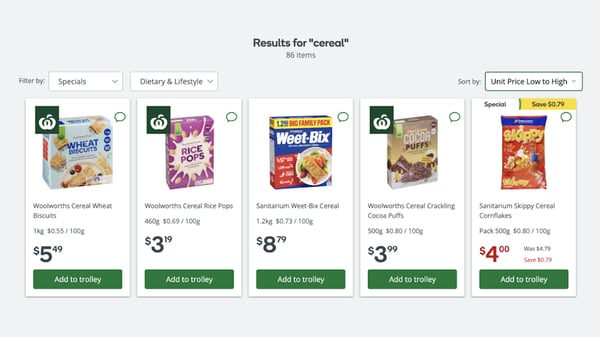
Unit pricing helps you compare the price by a standard measure, such as per 100g, per litre, per kilogram or per item.
Consumer Protection explains that unit pricing makes it easier to compare the same item across different sizes and packaging.
Consumer NZ also recommends using unit pricing to compare products between supermarkets, especially where stores do not stock exactly the same pack sizes.
When you are comparing, check:
- Is the larger pack actually cheaper per unit?
- Is the special cheaper than the home-brand option?
- Will you use the whole product before it expires?
- Are you buying two because you need two, or because the sign is telling you to?
- Is the online unit price easier to compare before you go?
3. Build meals around a “use first” list
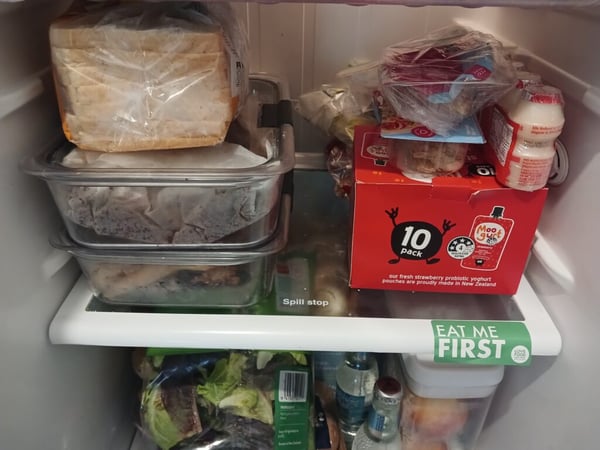
Before writing a shopping list, check what needs using first. Look in:
- the fridge
- the freezer
- the pantry
- the fruit bowl
- lunchbox supplies
- leftovers
Then write down three things that need using. Build meals around those before buying more.
This helps avoid one of the most common grocery budget leaks: buying food while older food quietly expires at home. A “use first” list might include:
- half a bag of spinach
- two carrots
- cooked rice
- sausages in the freezer
- yoghurt near its date
- bread rolls
- leftover roast vegetables
That could become fried rice, soup, wraps, pasta sauce, toasties, omelettes or lunchbox snacks.
This step is simple, but it changes the order of the shop.
Instead of asking, “What do we feel like eating?”, start with, “What do we already have that needs using?”
4. Make expensive ingredients go further
Meat, poultry and fish can be some of the most expensive parts of the trolley. You do not have to remove them completely to reduce costs. Often, the easier step is to stretch them.
For example:
- add lentils to mince in cottage pie, nachos or bolognese
- add beans to chilli, tacos or soups
- add grated carrot, courgette or onion to mince dishes
- use eggs, tofu, beans or chickpeas in some meals
- use a smaller amount of meat in stir-fries, pasta, fried rice or wraps
RNZ’s article included similar advice from food creator Alice Taylor, who suggested using lentils, beans or vegetables to stretch mince-based meals.
This is not about making meals feel mean. It is about making the expensive ingredient go further while still keeping meals filling.
5. Create a cheap backup meal for busy nights
Every household needs a meal for the nights when everything goes wrong.
The danger is that tired, busy nights often turn into takeaway nights. That is understandable, but if takeaway becomes the default rescue plan, it can put pressure on the budget quickly.
A cheap backup meal should be:
- quick
- filling
- made from ingredients you usually have
- acceptable to most of the household
- cheaper than takeaway
Examples could include:
- eggs on toast
- toasted sandwiches
- pasta with tinned tomatoes and cheese
- fried rice
- baked potatoes
- instant noodles with frozen vegetables and egg
- soup and toast
- beans on toast
- wraps with leftovers
RNZ’s article also included the idea of keeping simple basics like milk and bread on hand because they make quick fallback options possible.
The goal is not a perfect dinner. It is having something easy enough to stop a tired night becoming an expensive one.
6. Plan your top-up shop before you go
Many households do one main shop and then several top-ups.
Top-up shops are not always the problem. The problem is when each top-up turns into extra snacks, drinks, treats and forgotten items.
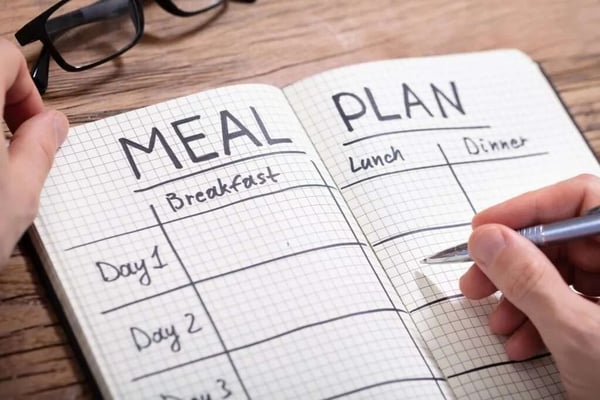
Try planning one midweek top-up for perishables such as milk, bread, fruit and vegetables. Keep it boring and predictable.
A simple top-up list might be:
- milk
- bread
- bananas
- apples
- yoghurt
- carrots
- one lunchbox item
If you can, avoid doing the top-up shop while hungry, rushed or with no list.
RNZ’s article included advice from University of Canterbury marketing professor Ekant Veer, who noted that supermarket layouts and displays can encourage impulse spending.
What members can do this week
A cheaper default shop does not need to be complicated. Try these five steps:
1. Choose five regular items to test. Try a cheaper brand or home-brand version and keep the swaps that work.
2. Check unit prices on three items. Compare by the same measure, not just the ticket price.
3. Make a “use first” list. Pick three things already at home and build meals around them.
4. Stretch one regular meal. Add lentils, beans or vegetables to mince, pasta, curry, soup or stir-fry.
5. Choose one backup meal. Keep the ingredients on hand for a cheap, quick dinner when the day gets away from you.
The point is not to make every shop perfect. It is to create a regular shop that is a little cheaper by default.
The aim is not to make your home colder or less healthy. It is to make sure you understand what is driving your bill and whether there are practical steps that could reduce avoidable costs.
Final thoughts from us
Food prices may pause for a month, but that does not always show up clearly at the checkout.
For many households, the pressure comes from the regular shop: the same basics, the same top-ups, the same rushed decisions, and the same expensive rescue meals when life gets busy.
A cheaper default shop gives you a practical way to respond. Not by cutting everything, but by changing a few repeat habits that can make the weekly shop work harder.
Start small. Keep what works. Repeat it next week.
Sources used in preparing this article
- Stats NZ: Selected price indexes: April 2026
- RNZ / Lucy Corry: Food prices stressing you out? How to save money at the supermarket
- Consumer NZ: Unit pricing: the secret to saving at the supermarket
- Consumer Protection: Saving at the supermarket with unit prices

Leave a comment